
With gold prices rising and debt holding steady, fund houses have launched multi-asset funds for passive customers who are not so nimble while churning their portfolios.

The report further noted that inflation is expected to fall to 4.5 per cent by quarter ended March 2017.
The ugly underbelly of the policies of economic liberalisation followed over the last two decades has been crony capitalism at its worst.

He says he has tremendous expectations from RIL's broadband digital services business.

Jayesh Gandhi, executive director, Morgan Stanley Investment Management in an interview with Business Standard, says Indian equities continue to remain a long-term bull story based on the growth prospect for the country and, hence, in a way cannot be ignored by global investors.
Bhartiya Janata Party patriarch Lal Krishna Advani has picked up for his blog this week a new book by the US-based Morgan Stanley executive Ruchir Sharma that identifies "graft driven inflation" and "crony capitalism" among the weaknesses and difficulties that can be a damper for India's high expectations.

Finance Minister Pranab Mukherjee is slated to present the Budget on February 26.
Urbanisation is a core component to the process of city formation and building out India's competitive strength in the global markets.

Indian markets started 2012 on a positive note. Ridham Desai, managing director and strategist and head of India equity research, Morgan Stanley, says, he expects a 15 per cent upside in the Sensex this year.
The Securities and Exchange Board of India has issued "certain observations" and "sought clarifications" on draft prospectus for Tata Consultancy Services Ltd's initial public offering.

The biggest losers on the National Stock Exchange's benchmark Nifty 50 index are stocks that have seen the highest turnover over the past 12 months, according a report by Morgan Stanley.
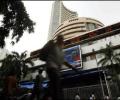
Market participants were cautious ahead of WPI data release tomorrow.

Analysts are bullish on consumption and investment themes.

With India's stock markets being one of the best performing among the emerging markets, a number of global pension funds are planning to make India-specific allocations.

The recent stimulus measures announced by China have seen most analysts sit up and take notice.

JPMorgan, Goldman Sachs, Bank of America Merrill Lynch and Morgan Stanley, as well as Britain's Asia-focused Standard Chartered said they would try to support London's financial sector

The markets ended lower amid a volatile trading session on Monday after profit taking was seen across the board because of growth concerns.
Shares of Indian mining company Vedanta fell to a fresh low after analysts at Morgan Stanley initiated their coverage of the company with a stark warning of the risks faced by investors.

The answer to that depends on whether the globe is able to contain the virus spread, says Samie Modak.
If the latest strategy reports of some leading foreign institutional investors (FIIs) are anything to go by, then the outlook for the Indian equity market appears bleak. This is, despite section of experts pitching for the current attractive valuations.

The research also suggests that they are willing to cut their savings to retain their expenditure growth at previous year's levels.

The first issue is inflation, which has been widely discussed. The government is now rightly working on reversing fiscal and monetary stimulus to manage the inflation pressure.
Citigroup will soon announce what its executives describe as a drastic plan to shed a host of businesses and shrink itself by one-third, a leading financial daily said on Wednesday, citing people familiar with the bank.

The two countries also signed a 'Memorandum of Agreement regarding the Assignment of Liaison Officers', which will facilitate the posting of one military officer from each country with the military of the other.

Many get confused between investing in equities and equity mutual funds. They think equity funds are the same as equities or stocks

Foreign money has been pouring into India's fast-growing e-commerce sector, with investors ranging from Japan's Softbank Corp to Singapore's Temasek Holdings.
The Indian equity market has once again demonstrated its high beta characteristic in bear markets. The fundamental underpinning to this high beta status in bear markets is India's dependence on global financial markets to fund its macro -- more than three-fourths of the flows into India come from portfolio sources (which are linked to global financial market outcomes) -- quite the opposite of the emerging markets average.
Property developer Indiabulls Real Estate is talking to investors to raise at least $150 million (Rs 750 crore) from sale of shares to select investors as part of its qualified institutional placement (QIP) plan.
Less than three weeks after the curbs on participatory notes, overseas investors are rushing to invest in the booming Indian stock markets directly by applying for Foreign Institutional Investor licences.

Reliance Industries Ltd, India's most valuable company, is back on a growth path after six months of challenges as it posted better than expected earnings in the December quarter, brokerages said.
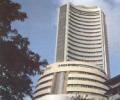
Terming the just-concluded fiscal as an "okay year", a panel of financial experts said though this fiscal would be a challenging one, the domestic equity markets could turn out to be a "star performer".
Here's how you can get placed at an investment bank for your summer training.
China spends seven times more on infrastructure than India.
China spends seven times more on infrastructure than India.
It is possible to calm the waters, but it'll mean unlearning our post-Depression lessons

In the mid-year monetary policy review on Tuesday, RBI, left the key interest rate unchanged but reduced cash reserve ratio by 0.25 per cent to infuse additional liquidity of up to Rs 17,500 crore (Rs 175 billion) into the system.
Stephen S Roach, chief economist at the US-based Morgan Stanley, returning from his fourth trip to India in three years, said the South Asian country has achieved breakthroughs in savings and foreign direct investments.
Foreign institutional investors were the major sellers on the Indian bourses in the last six months, accounting for total outflows of Rs 62,000 crore (Rs 620 billion).
